
Who Owns Technology Risk on the Connected Jobsite?
LC
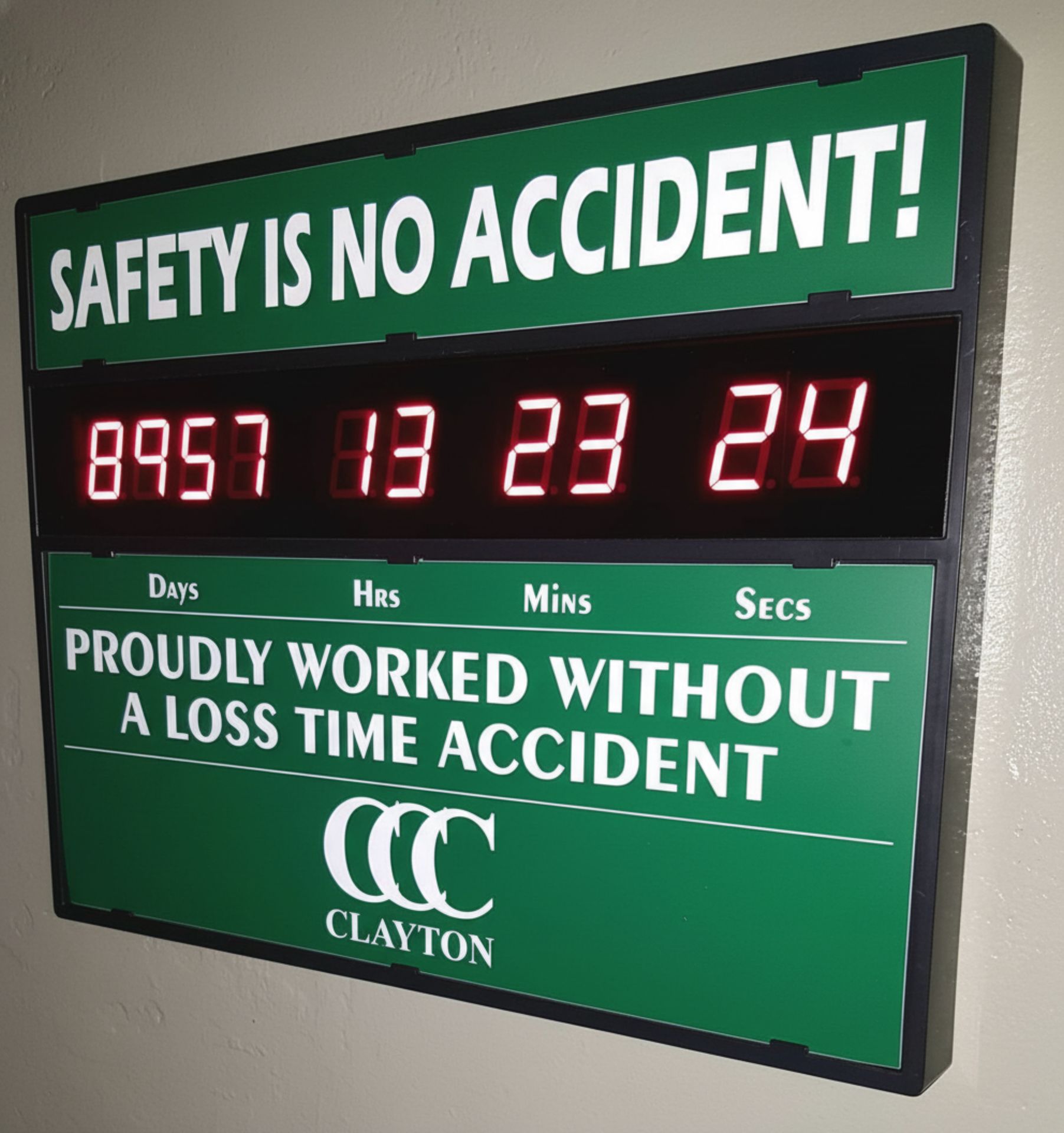
Walk into almost any construction office or jobsite trailer and you will find something like this. A board counting the days worked without a loss-time accident. Everyone on the project sees it. Everyone knows what it means. And when something goes wrong, it resets.
That board is not just a display. It is a management system. It makes risk visible. It creates shared accountability without anyone having to ask for it. It tells you something important about the culture of that jobsite.
Now ask yourself: what is the equivalent for technology risk on your projects? Where is that board?
There is not one. And that gap is what this is about.
The Jobsite Is Changing Faster Than Risk Management Can Keep Up
Project management platforms, shared data environments, connected equipment, and AI-driven tools are reshaping how construction gets done. Information moves faster. Decisions are made differently. Coordination spans more organizations than ever.
These are real improvements. But they are being adopted faster than the frameworks used to manage risk can absorb them.
The pace of change is the exposure. Not any single platform or tool. The fact that capabilities are expanding in real time, use cases are evolving mid-project, and organizations are making decisions about technology without fully understanding what risk they are taking on.
The Problem Is Visibility
In safety, risk is visible. There are systems to catch early indicators of harm before they become incidents. That visibility is what makes the whole program work.
Technology risk does not have that equivalent.
Most AEC firms do not have a consistent way to track exposure across their project management platforms, shared data environments, connected jobsite systems, or the AI tools influencing planning and execution. Issues are invisible until they become incidents.
A misconfigured system. Inappropriate data access. A tool used outside its intended scope. These create exposure long before anyone recognizes it.
By the time it is visible, the impact has already occurred.
The Problem Is Ownership
Technology risk in construction does not belong to a single party. That is the core challenge.
Platforms are shared across multiple organizations. Data is created, accessed, and modified by different stakeholders throughout a project. Vendors provide systems that directly influence execution decisions. And increasingly, those systems sit outside the traditional control boundaries of any one firm.
The result is a familiar set of questions that nobody has clean answers to:
- Who is responsible for how a shared platform is configured?
- Who owns the risk when data is accessed in a way that was not planned for?
- Who is accountable when a tool is used outside its original scope?
Contracts were not designed for this. They define roles and liabilities in a more linear model of project delivery. The level of interdependence that technology has introduced does not map cleanly onto those frameworks.
The result is a growing gap where responsibility is unclear, accountability is hard to enforce, and risk is distributed without being actively managed.
Risk, Legal, and Operations Are No Longer Aligned
As technology adoption accelerates, a second problem becomes visible. The three groups that need to be aligned are operating with different pictures of reality.
Risk sees increasing exposure. Legal is working from contracts that may not reflect how systems are actually used in the field. Operations is focused on delivering the project using the best tools available.
Individually, each of these is reasonable. Together, they create a disconnect between how risk is documented and how work actually gets done.
Insurance coverage may not map to technology-driven exposure. Contract language may not account for shared systems or data access. And operational decisions about new tools rarely involve a conversation about what risk they introduce.
Construction Already Knows How to Solve This
The industry does not need to invent a new approach. It already has one.
That safety board works because safety risk is visible, measurable, embedded in daily operations, and supported by clear ownership and accountability. Everyone on the jobsite knows the number. Everyone knows who owns it.
The same principles apply to technology risk. Making it manageable starts with three steps.
First: visibility. Organizations need a way to identify early indicators of exposure across their platforms, data environments, and AI tools. Not just after incidents occur. Early, the way near-miss tracking works in safety.
Second: ownership. Risk needs to be clearly assigned across internal teams, external partners, and vendors, in a way that reflects how systems are actually used. Not based on assumptions from a contract that predates how the technology is deployed.
Third: alignment. Contracts, insurance, and operations need to reflect the same understanding of the environment. That does not happen by default. It requires the right people in the right conversations.
The question is not whether technology is creating new exposure on construction projects. It is whether your organization can see it, understand it, and take ownership of it before it results in loss.
Construction has spent decades building a culture where safety risk is tracked, visible, and taken seriously. The same commitment is what technology risk requires now. The difference is that this time, the risk is less visible, more distributed, and changing faster than most of the systems designed to manage it.
There is no board on the wall counting the days since your last technology incident. There should be a process that works just as well.